Industrial vacuum service: dry bulk material recovered fast.
Whether it’s an emergency spill cleanup or scheduled maintenance, Mole·Master® fields portable and truck-mounted vacuums that can remove virtually any wet, dry, or even hazardous material. We operate the UltraVac HVV-4915, T-475, and electric HiVac 250, and a DK Vacuum Transfer Unit where grain or plastic pellets need to be removed.
Anywhere dry bulk material accumulates and needs to come out.
Whether it’s an emergency spill cleanup or scheduled maintenance cleaning, Mole·Master®’s fleet of portable and truck-mounted industrial vacuum equipment is ready to respond. Virtually any wet, dry, or even hazardous material can be remediated safely and efficiently.
Industrial vacuum services are the ideal addition when the conveying system cannot handle material dislodged during silo cleaning. This is particularly beneficial for Biofuels/Ethanol and Food Processing projects, or any job where the in-place conveying system is not available. Recovered material is contained and transported in sealed tanker units for proper disposal or recycle.
UltraVac HVV-4915, T-475, and HiVac 250.
We use the UltraVac HVV-4915 and the T-475 and electric HiVac 250 for most industrial vacuum applications. Where grain or plastic pellets need to be removed we may use a DK Vacuum Transfer Unit. Equipment selection is matched to the material type, particle size, contamination level, and required recovery volume.
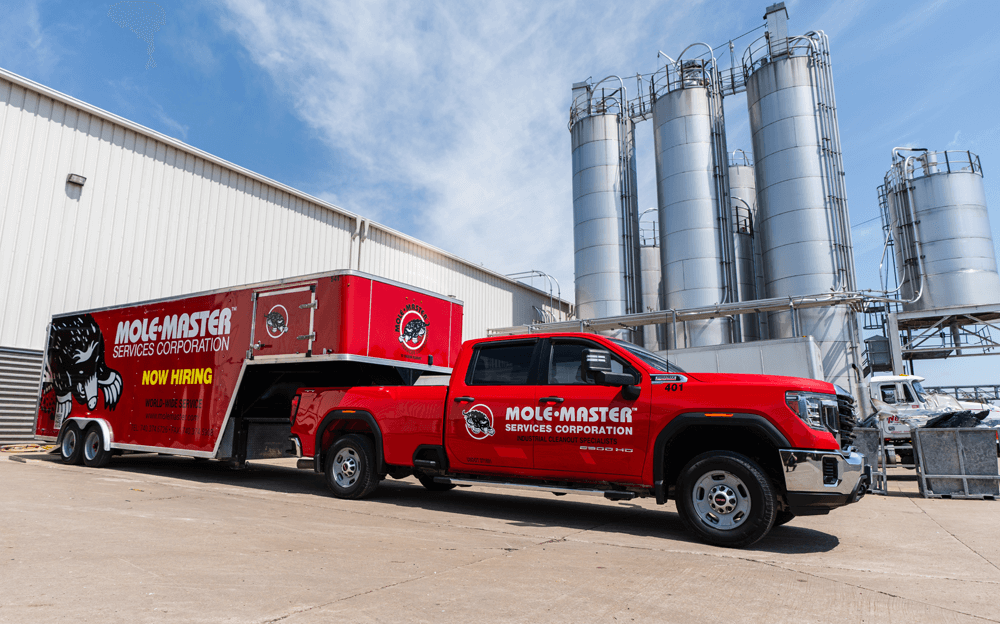
High-volume vacuum for large-scale material recovery.
The HVV-4915 is a high-volume vacuum unit suited for large silo cleanouts, post-cleaning residue recovery, and heavy dust accumulation. High inlet velocity and large-capacity tanker for continuous operation on extended jobs.
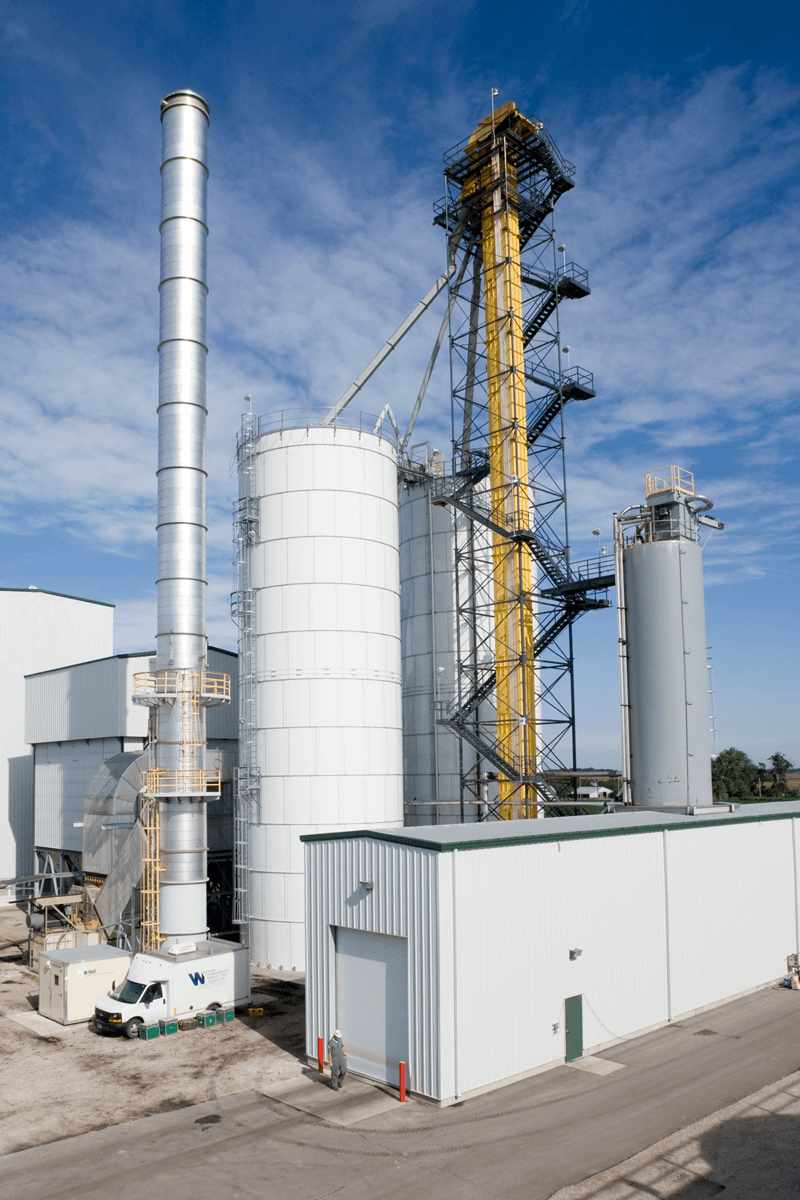
Versatile mid-size unit for process areas.
The T-475 handles process area cleanup around conveyors, transfer points, and in-plant accumulation. Compact enough to maneuver in tight indoor environments while providing meaningful vacuum capacity for bulk dry materials.
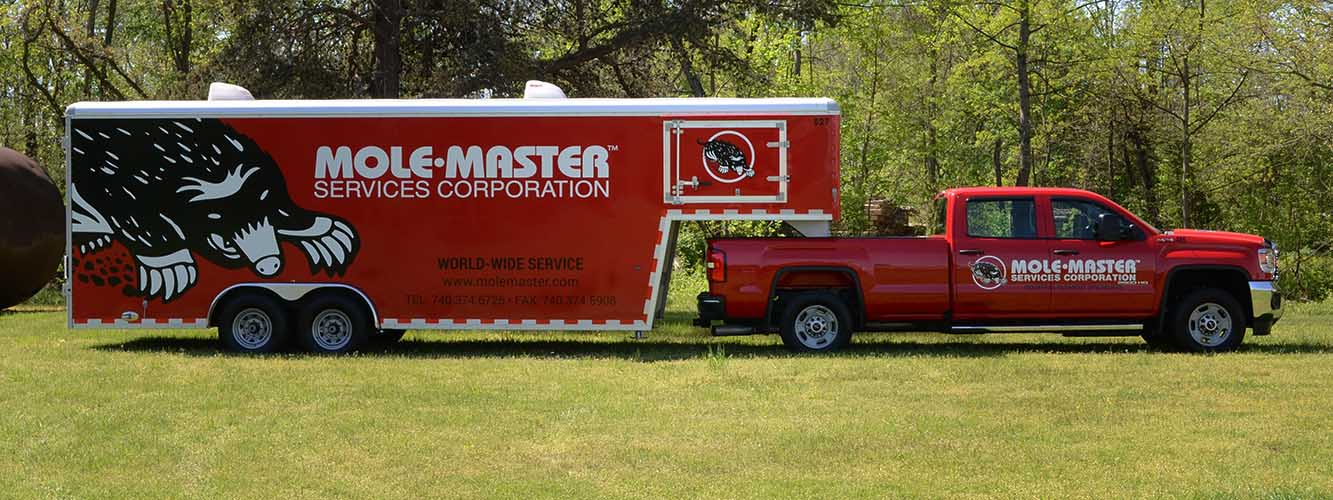
Fine materials, tight access, and dust collection.
The HiVac 250 is optimized for fine particulate recovery, cement dust, grain fines, fly ash, and similar materials. Well-suited for confined access areas where larger equipment cannot reach.
Industrial vacuum removes material so workers don’t have to enter.
One of the primary safety applications of industrial vacuum service is eliminating or reducing the need for workers to enter confined spaces to manually scoop or shovel accumulated material. Vacuum hoses can reach into sumps, pits, and vessel bottoms where human entry would require OSHA permit procedures, atmospheric monitoring, and stand-by rescue equipment. Mole·Master® prefers the vacuum approach wherever geometry permits, it’s faster, safer, and more thorough than manual recovery.
- Hose extensions that reach into pits, sumps, and vessel bottoms
- No atmospheric hazards from disturbing dry material when vacuum-contained
- Recovered material transported in sealed tanker, no open-air dumping
- Compatible with post-Big·Mole silo cleaning for final residue removal
- Dust suppression during recovery in open-air process areas
Industrial vacuum across every sector we serve.
Any facility that stores, processes, or transfers bulk dry material will accumulate material that needs to be vacuumed at some point. Industrial vacuum is one of the most broadly applicable services Mole·Master® offers.
Cement dust, fly ash, and silo residue.
Post-silo-cleaning residue, cement dust at transfer points, and fly ash recovery from pits and process areas around cement plant equipment.
Cement IndustryGrain fines and dust at elevator transfer points.
Grain dust is a serious explosion hazard. Industrial vacuum collects fine material accumulations at transfer chutes, legs, and in sump areas to reduce ignition risk.
Feed & GrainFly ash, bottom ash, and coal dust recovery.
Power plants generate significant volumes of ash and coal fines. Industrial vacuum service handles recovery from pits, sumps, precipitators, and scrubber systems.
Power IndustryTell us the material, the volume, and the access point. We’ll confirm the right vacuum unit.
Describe the material type (fine dust, coarse aggregate, or somewhere in between), the estimated volume, and the access geometry. We’ll confirm whether the HVV-4915, T-475, or HiVac 250 is the right unit for the job.