Condenser & heat exchanger cleaning: efficiency restored.
Scale, biological fouling, and mineral deposits reduce heat exchanger efficiency before plant teams notice the throughput impact. Mole·Master® restores tube bundles, shell-and-tube exchangers, and condensers to design specification, on your shutdown schedule.
A fouled condenser doesn’t fail suddenly: it drains efficiency for months before you notice.
Regularly scheduled condenser cleaning by Mole·Master® can maximize efficiency, reduce operating costs and prevent minor issues from becoming major problems by removing pollen, mold spores and other bio-contaminants. Industrial condensers that aren’t cleaned regularly can develop a buildup of dust and contaminants that reduces operating efficiency and cooling capacity. Annual condenser cleaning can provide up to 20% in efficiency gains.
Dangerous bacteria and other contaminants can multiply in condenser systems that aren’t regularly cleaned, potentially posing health risks. Any project that requires confined space entry can be hazardous. Mole·Master®’s safety-first approach provides effective industrial condenser cleaning that meets or exceeds OSHA standards with extensive confined space entry and lock-out/tag-out training. Hydro-lancing, pigging, and rotary tools rated up to 15,000 psi scour condensers clean without dismantling equipment.
Assess first, clean second. No tube damage.
Different fouling types require different methods. Mineral scale, biological fouling, and process-side deposits each respond to different cleaning approaches. Mole·Master® selects the right method for each exchanger type before mobilizing.
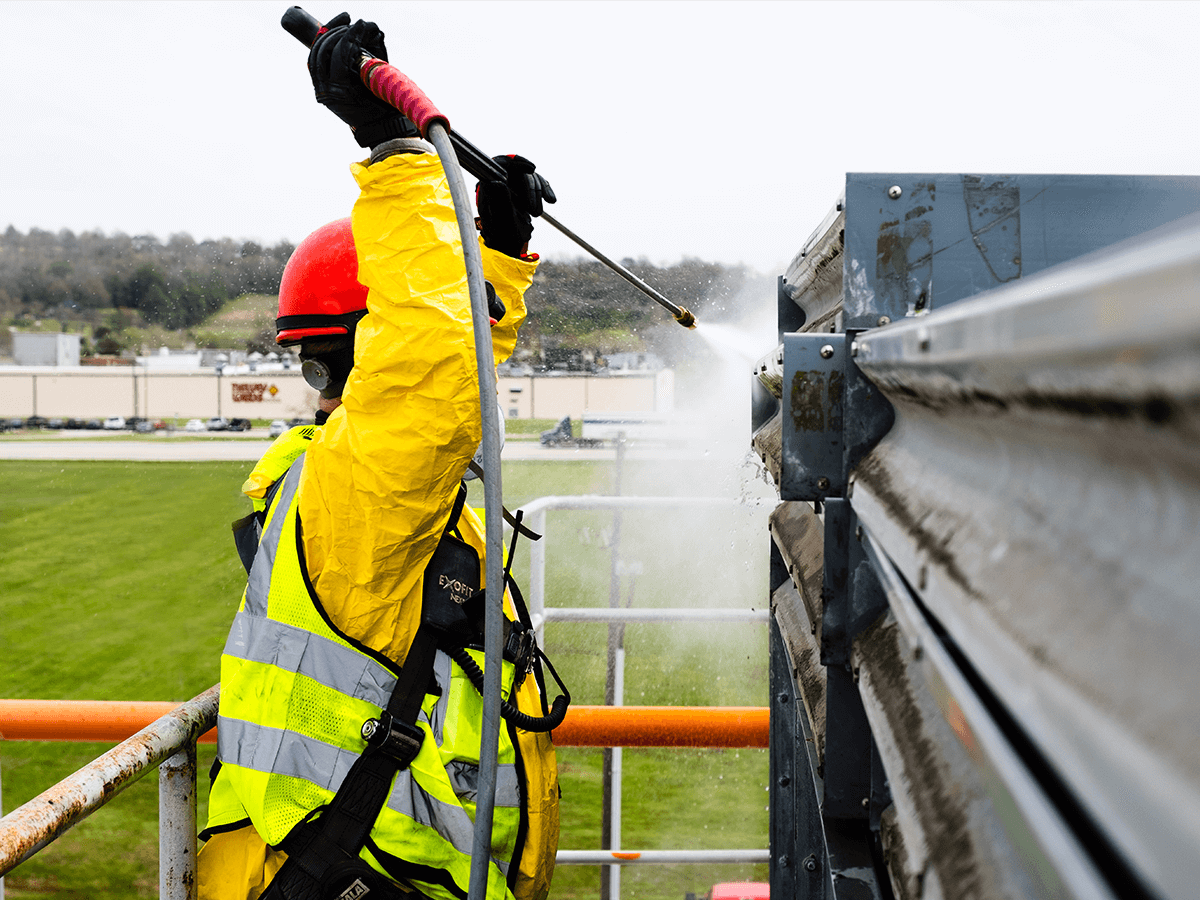
Hydro Lancing
High-pressure water jetting through individual tubes removes mineral scale, biological deposits, and soft fouling. Pressure is matched to tube material to prevent wall thinning or damage. Debris is captured and removed from the bundle at the exit end.
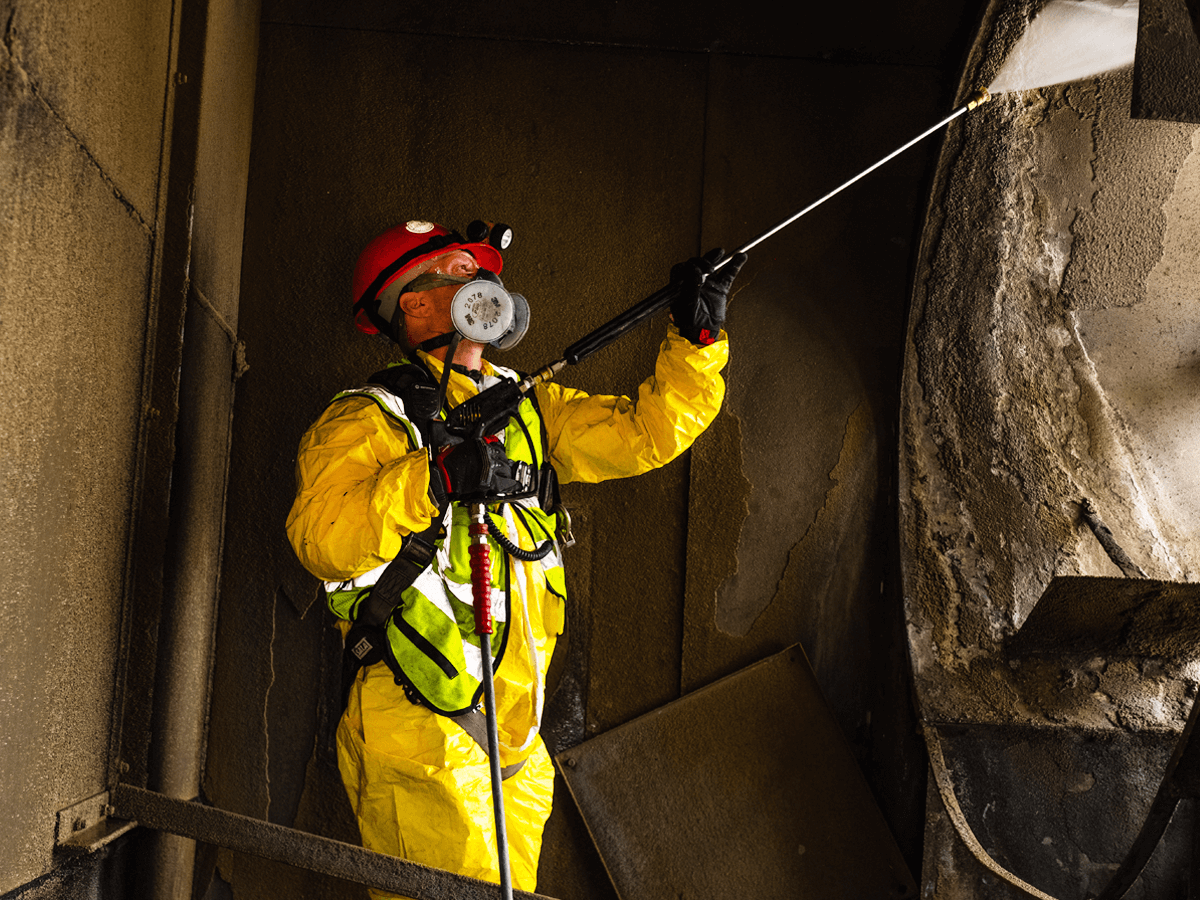
Mechanical Tube Cleaning
Nylon brushes, polypropylene plugs, or combination tools are driven through tubes to mechanically dislodge hard deposits. Effective on inorganic scale, polymerized fouling, and cases where hydro lancing alone is insufficient. No tube wall damage when matched to the correct brush OD.
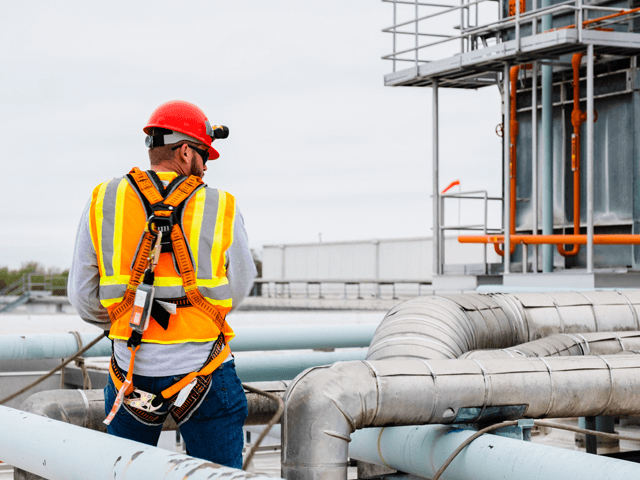
Post-clean inspection & pressure test.
After cleaning, Mole·Master® performs a flow check and visual inspection of tube bundle condition. Any tube showing unusual wall condition is flagged for the plant’s maintenance team. Written documentation of work performed is provided at job completion.
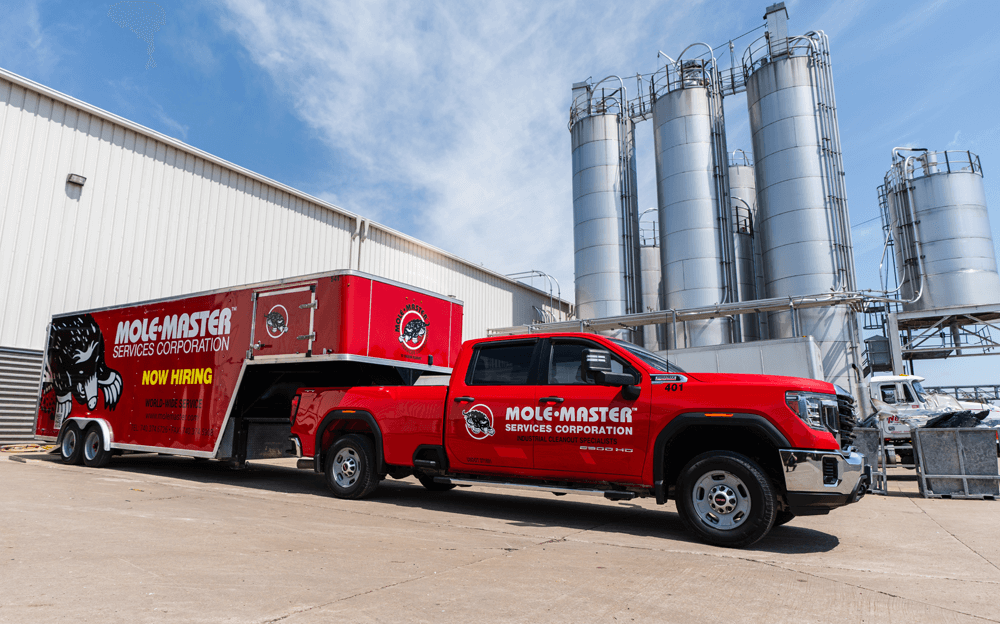
Planned outage or emergency response. We mobilize fast.
Condenser cleaning is most effective when scheduled during planned outages, but fouling doesn’t wait for convenient timing. Mole·Master®’s 24/7 answering service means a crew can be on the road in as little as 2 hours when an unscheduled situation demands it. The same crew that handles silo cleaning can handle condenser cleaning if it’s part of the same outage scope.
- Tube bundle cleaning, shell-and-tube, plate frame, and air-cooled exchangers
- Condenser shells, water box cleaning, tube sheet inspection
- Cooling tower fill and basin cleaning
- Documentation package provided at job completion
- 24/7 emergency response, crew on the road in as little as 2 hours
Condenser cleaning across Mole·Master®’s full industry portfolio.
Steam condenser and heat exchanger cleaning.
Power plant steam condensers accumulate scale and biological fouling rapidly. Scheduled tube cleaning maintains thermal efficiency and prevents forced outage extensions.
Power IndustryKiln cooler and air heat exchanger cleaning.
Cement kilns generate extreme heat that passes through cooling exchangers. Scale buildup in these systems directly affects kiln throughput and fuel efficiency.
Cement IndustryEthanol plant condensers and coolers.
Ethanol distillation produces fouling deposits in condensers and heat exchangers. Regular cleaning is critical to maintaining distillation efficiency.
Bio-Fuels IndustryTell us the exchanger type and the fouling history: we’ll confirm the cleaning approach.
Shell-and-tube, air-cooled, plate frame, or cooling tower, describe the exchanger type, the fouling description, and your outage window. We’ll confirm method, crew size, and mobilization timeline.