Confined space entry: MSHA-certified, fully permitted, zero shortcuts.
Mole·Master®’s first priority is always eliminating the need for human entry into confined spaces. When entry is unavoidable, our MSHA-certified crews (Parts 46, 47, 48) follow every OSHA permit procedure, atmospheric monitoring, rescue standby, attendant, and full documentation. No shortcuts. Ever.
The goal is always to eliminate entry. When that’s not possible, entry is done correctly.
Although Mole·Master®’s proprietary Big·Mole® turnkey silo, bin, and vessel cleaning system does not require human entry, there are some situations in which personnel still need to enter a silo or storage vessel. Silo inspections, for example, require entry into the vessel. Entry is required if jack hammering is needed, and many food processing projects also require confined space entry to scrape or brush down the silo walls. Mole·Master® personnel maintain the highest levels of training for MSHA and OSHA Confined Space Entry standards.
When a job can be completed without entry, that is the approach used. When a task genuinely cannot be completed without physical access, Mole·Master® follows full protocol: safety meeting, lock out/tag out, gas monitoring, proper PPE including harness inspection, and tripod-assisted entry. No corner is cut. No entry takes place without a permit.
Every entry follows the same procedure. No exceptions.
Mole·Master®’s confined space entry protocol exceeds minimum OSHA requirements. The full procedure below is followed on every entry, regardless of perceived risk level or schedule pressure.
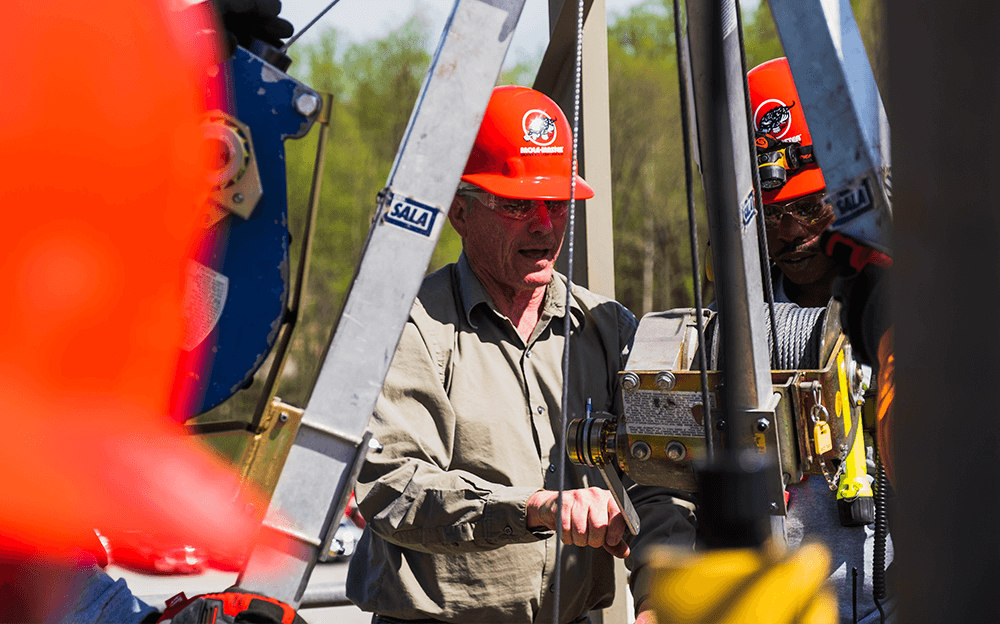
Permit issuance and hazard identification.
An OSHA-compliant entry permit is completed before any entry commences. All hazards are identified: atmospheric, engulfment, entrapment, and physical. Energy isolation is confirmed (LOTO). The permit is signed by the authorized entrant supervisor and the facility’s safety representative.
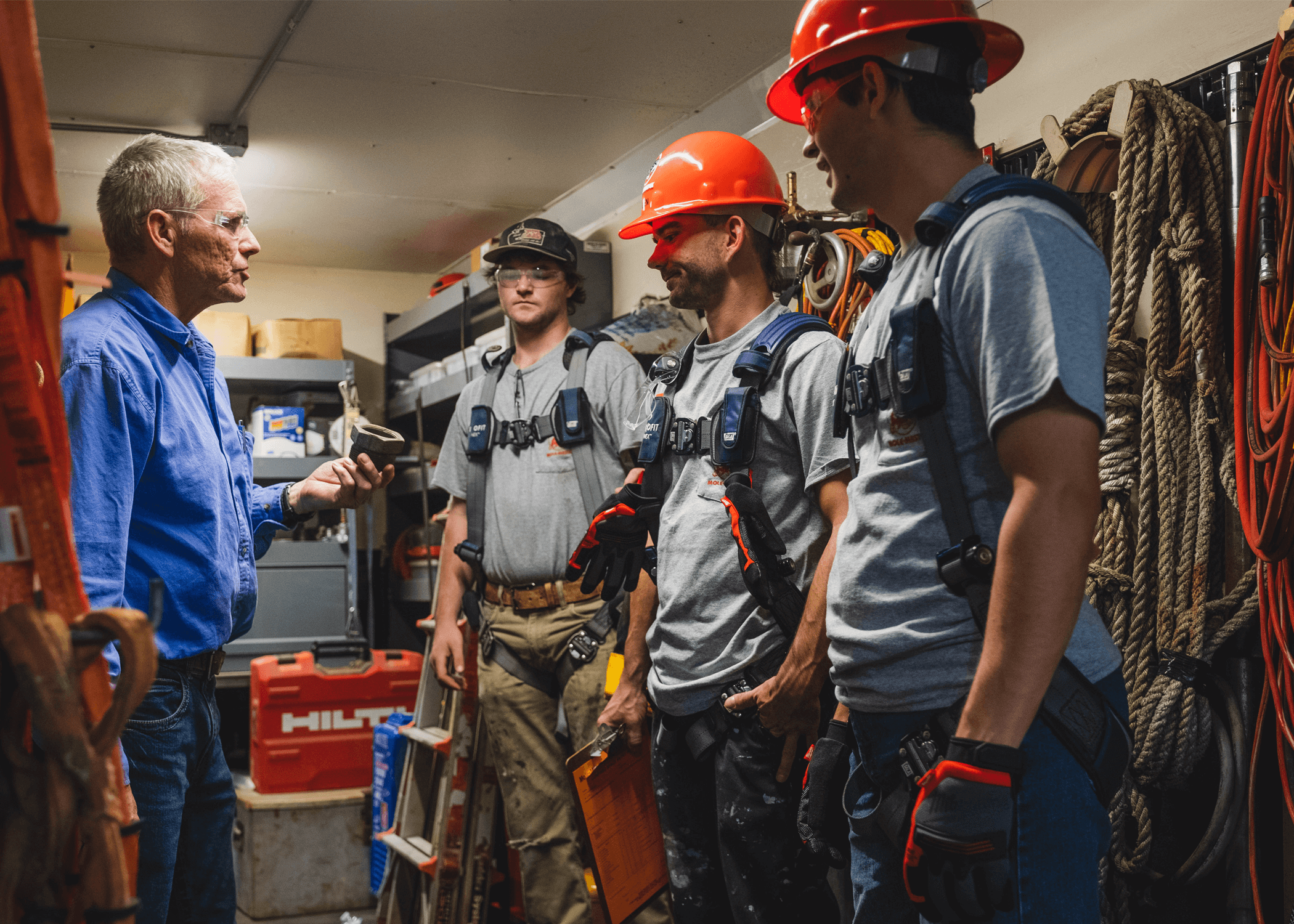
Atmospheric testing and continuous monitoring.
Pre-entry atmospheric testing confirms oxygen levels (19.5%–23.5%), flammable gas levels (below 10% LEL), and toxic gas concentrations. Continuous monitoring continues throughout the entry. Entrants are equipped with personal gas monitors. Forced-air ventilation is used when required.
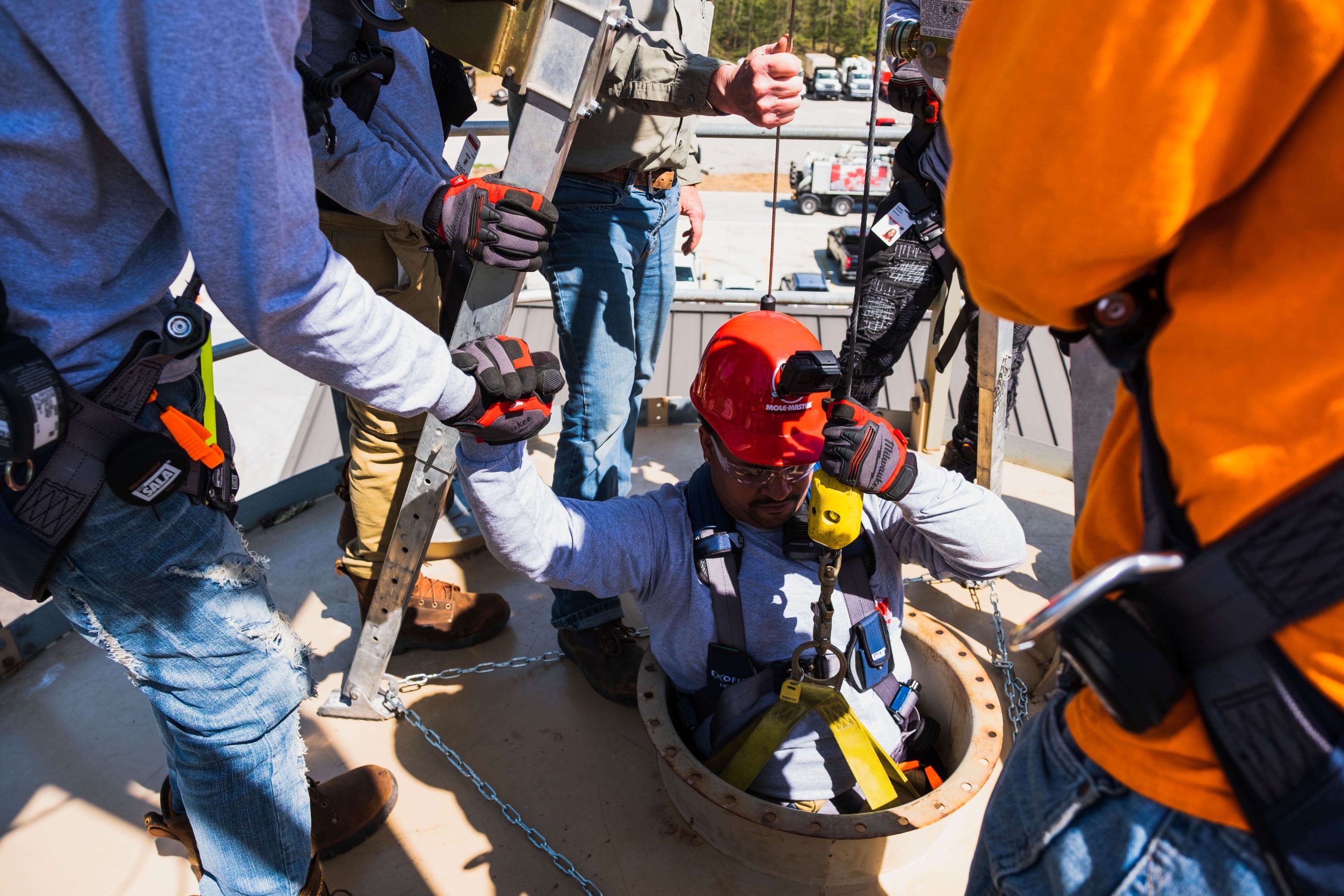
Retrieval system, attendant, and rescue standby.
Every entry uses a full-body harness, tripod, and mechanical winch for non-entry retrieval. A dedicated attendant remains at the entry point at all times with communication maintained to the entrant. Emergency rescue capability is staged at the site before entry begins.
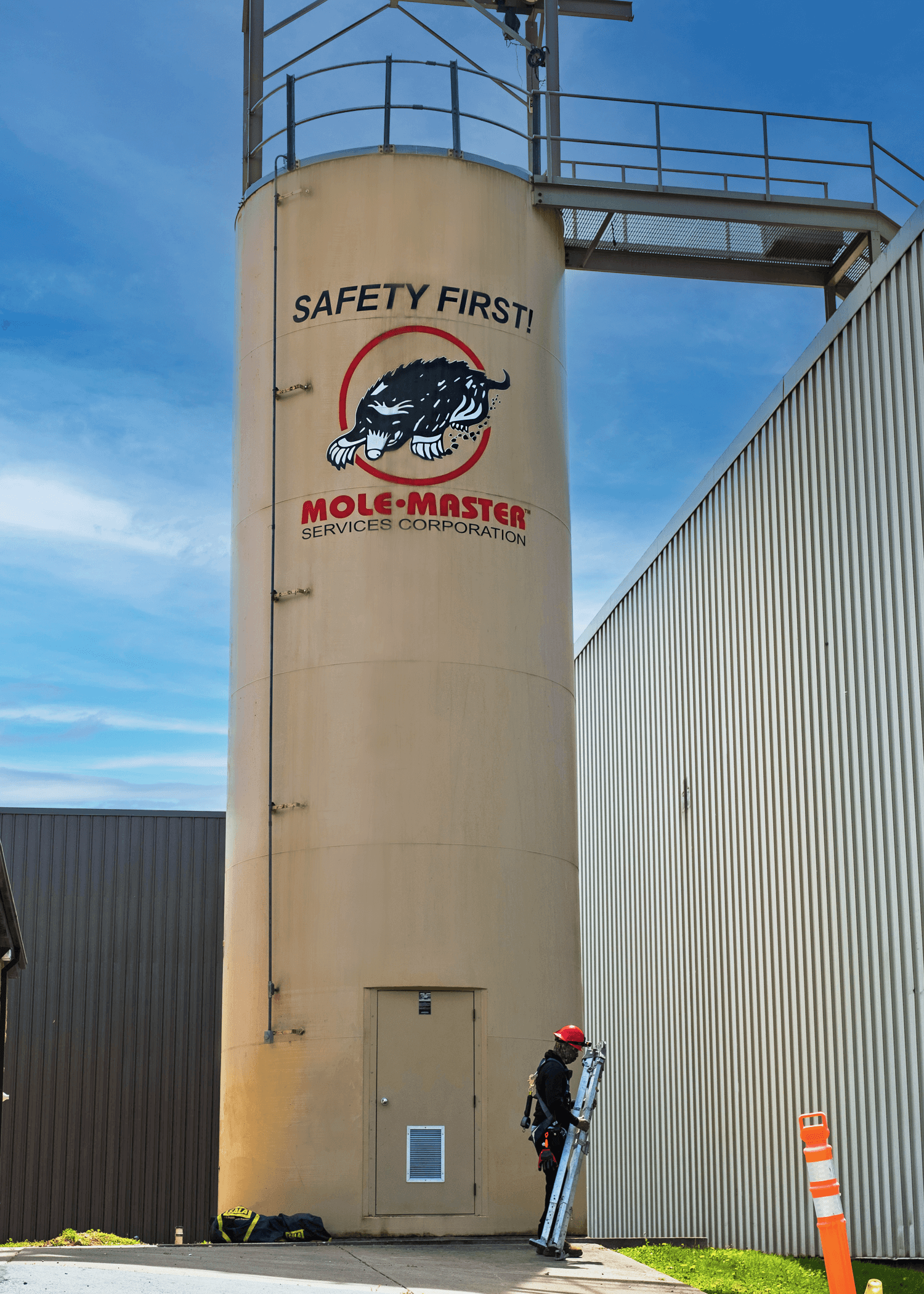
36-foot training silo at HQ. MSHA certified. No shortcuts.
Mole·Master® trains confined space entry crews at its 36-foot bulk storage training silo at the Marietta, Ohio headquarters. Real-environment drills, not classroom simulations, ensure every crew member can operate safely under actual confined space conditions. MSHA 5000-23 certification (Parts 46, 47, and 48) is maintained for all entry-qualified crew members. Documentation of training is available upon request for customer safety audits.
- MSHA 5000-23 certified. Parts 46 (metal/nonmetal surface), 47, and 48 (underground)
- 36-foot on-site training silo at Marietta, Ohio HQ, real-environment drills
- Annual re-certification maintained for all entry-qualified crew members
- Full OSHA 1910.146 compliance on every permit-required confined space entry
- Training documentation available for customer safety compliance records
Confined space entry across every sector with bulk storage vessels.
Any industry with silos, bins, tanks, vessels, or process chambers may require confined space entry for cleaning, inspection, repair, or maintenance tasks that cannot be completed from outside.
Grain bin entry with engulfment and dust hazards.
Grain silos present the highest confined space risk: engulfment, flowing grain, and explosive dust. Mole·Master®’s procedure addresses all three before any crew member enters.
Feed & GrainCement silo and bin inspections
Post-cleaning inspection and repair tasks in cement silos often require entry for close examination of wall conditions, cone damage, and discharge gate repairs.
Cement IndustryCoal storage entries with explosive atmosphere protocol.
Coal storage confined space entry requires non-sparking tools, methane monitoring, and continuous atmospheric testing throughout the entry period.
Coal IndustryTell us the vessel, the task, and the hazard profile: we’ll confirm the correct entry procedure.
Describe the vessel type, the task requiring entry, any known atmospheric or engulfment hazards, and the facility’s existing safety requirements. Mole·Master® will confirm the entry protocol, crew certification, and mobilization timeline.