Abrasive & dry ice blasting: no chemicals, no secondary waste.
Media blasting removes coatings, scale, buildup, and contamination from vessels, structural steel, and process equipment. Mole·Master® offers both abrasive blasting and dry ice pellet blasting, selecting the right method for your surface, your environment, and your schedule.
When buildup, scale, or old coatings have to go: fast.
Mole·Master® is highly skilled in determining the media blasting solution that will work best for your specific application and can provide these services for any project, large or small. Media blasting is suitable for a wide range of surfaces such as silo and bin interiors and exteriors, and is typically performed for at least one of three reasons: cleaning a surface, preparing a surface for painting, or controlling erosion of a surface.
Media blasting historically was referred to as sand blasting. Sand used as a blasting media has been determined a potential health hazard. Mole·Master® DOES NOT USE SAND as a media for any of our surface cleaning projects. When deposits are stubborn, crews switch to abrasive media or residue-free, non-toxic dry-ice blasting that meets or exceeds FDA and USDA standards.
Abrasive blasting or dry ice: matched to your surface and environment.
Most facilities need both methods at different points in their maintenance cycle. Mole·Master® crews are trained on both and will recommend the right approach for every application.
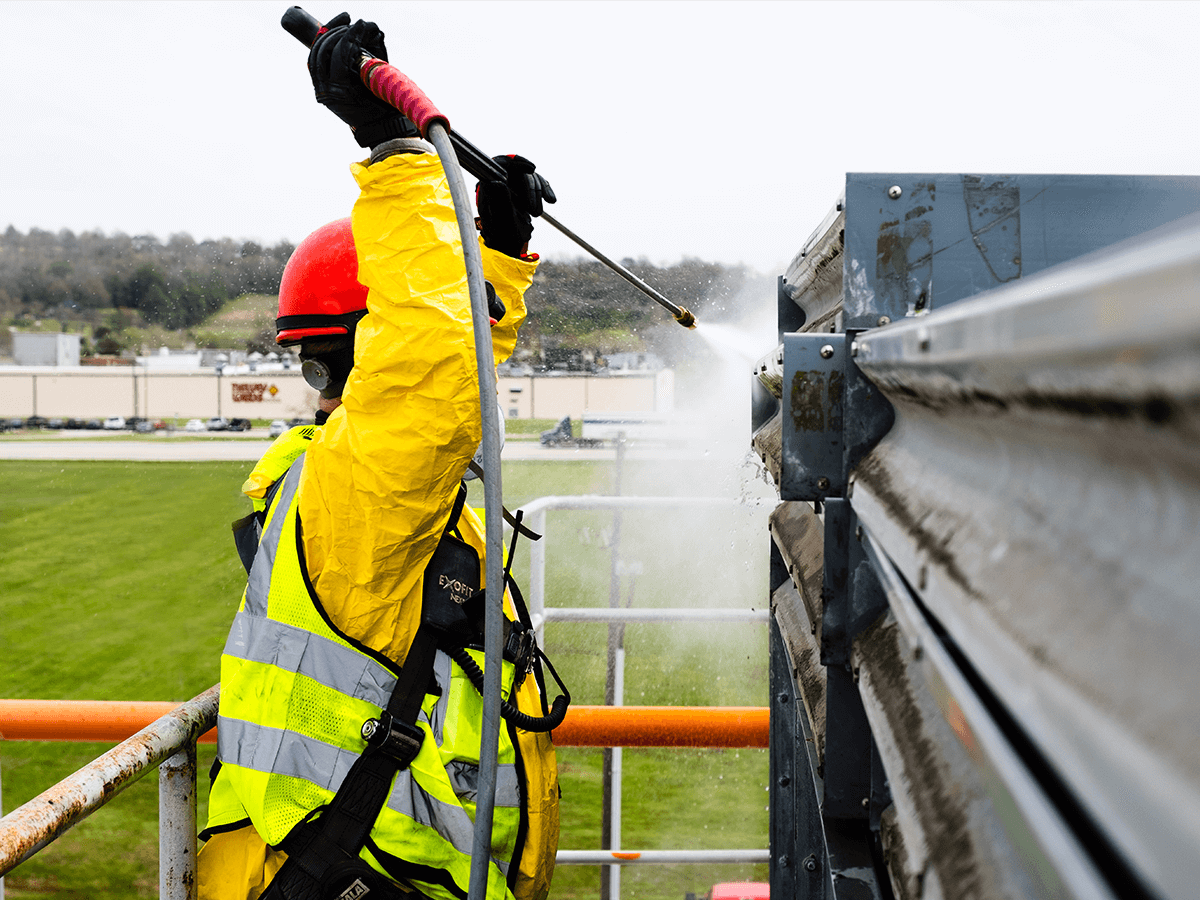
Abrasive Blasting
High-velocity abrasive media (steel grit, aluminum oxide, or walnut shell) removes rust, mill scale, old coatings, and heavy buildup from tanks, vessels, structural steel, and process equipment. Proper containment and media recovery included. SSPC / NACE surface prep standards met.
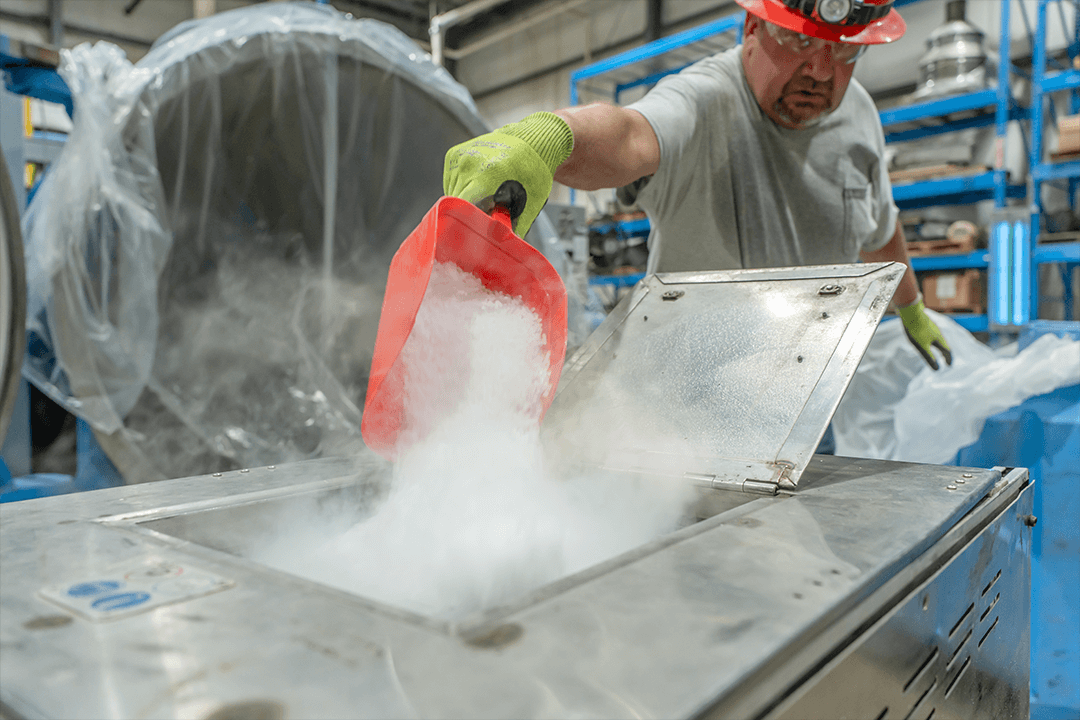
Dry Ice Pellet Blasting
Solid CO₂ pellets are accelerated against the surface. On contact, they sublimate, converting directly from solid to gas, so there is no secondary waste, no moisture, and no chemical residue. Ideal for electrical panels, food-contact surfaces, and any area where water or abrasive residue cannot be tolerated.
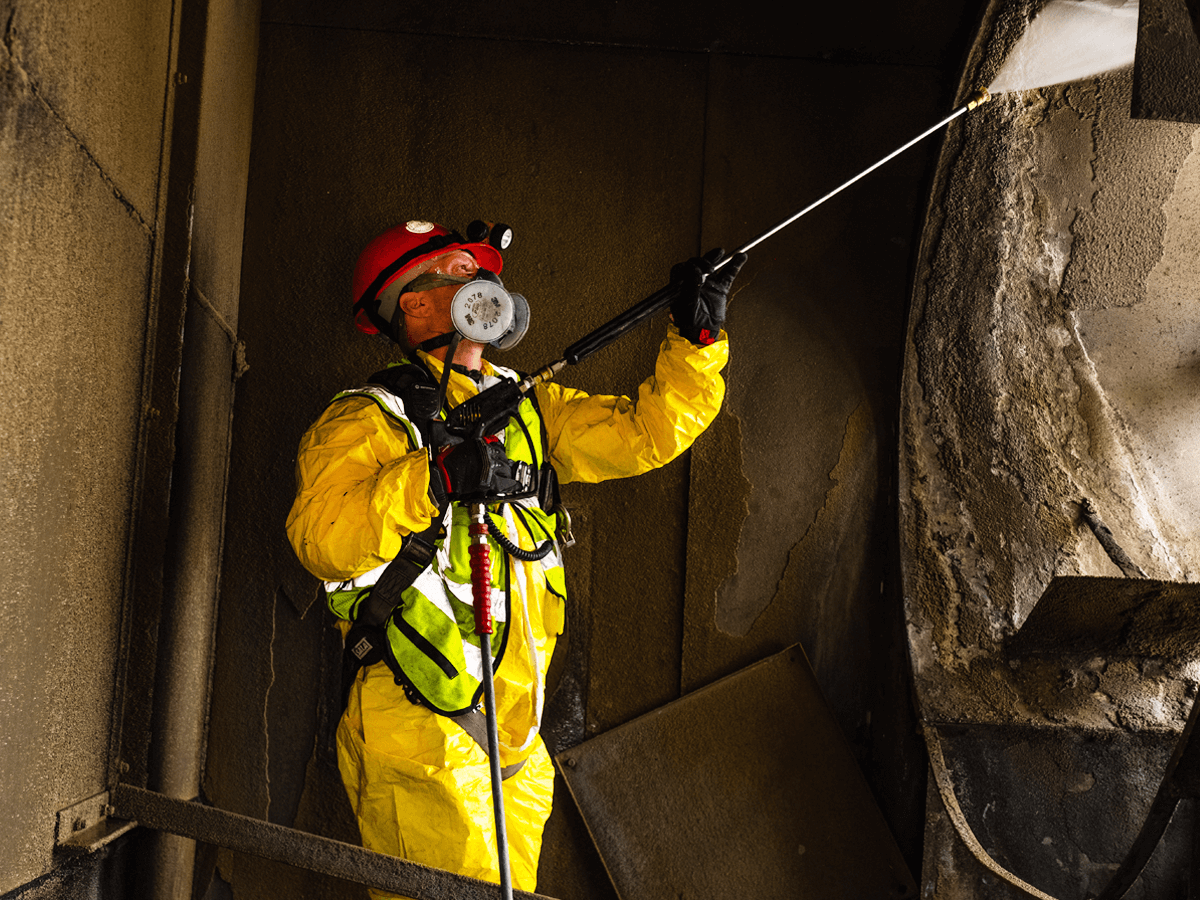
Right method selected before work begins.
Mole·Master® evaluates the substrate, coating type, environmental restrictions, and facility schedule before selecting a method. You will not receive an abrasive blast where dry ice is the correct tool, or vice versa. The evaluation is part of the service.
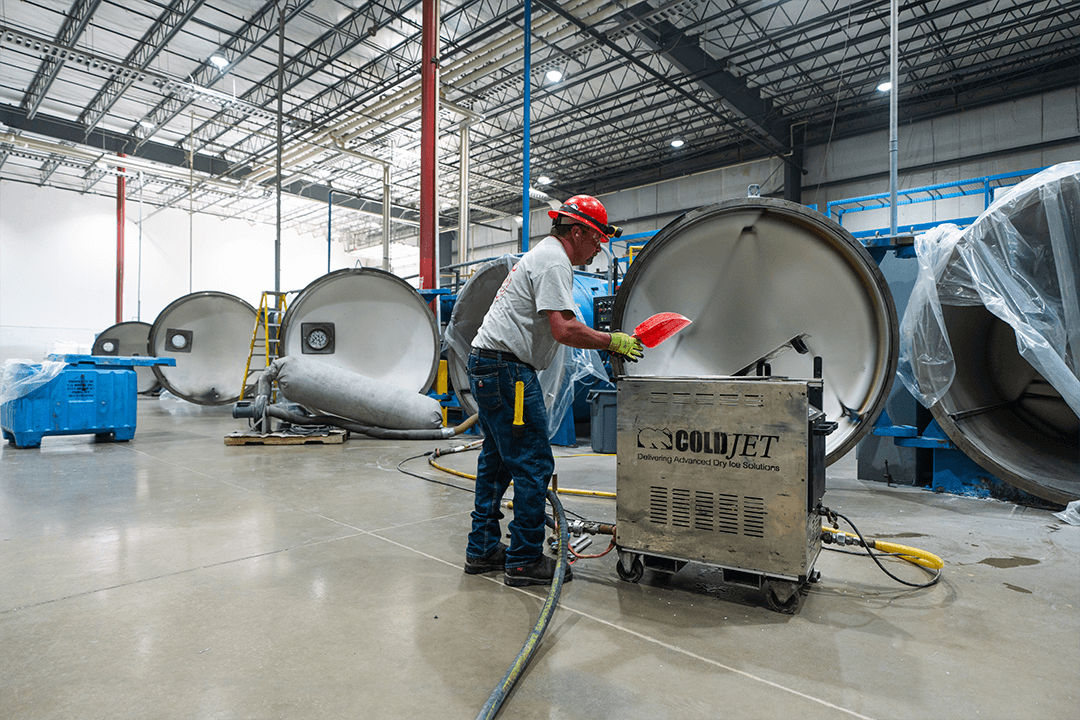
The blasting method that leaves nothing behind.
Dry ice blasting is the process of accelerating solid CO₂ pellets (dry ice) at high pressure against a surface. The pellets sublimate on contact, instantly changing from solid to gas, so no secondary waste is generated. No water. No chemical residue. No cleanup of blast media. This makes dry ice blasting uniquely suitable for food processing facilities, electrical environments, and any application where post-blast cleanup would cause a secondary problem.
- No water, suitable for electrical panels and control rooms
- No secondary waste. CO₂ sublimates on contact, no media recovery
- No chemical residue, residue-free, non-toxic, and meets or exceeds FDA, USDA, and EPA guidelines
- Non-abrasive, will not damage sensitive substrates or thin-gauge metal
- In-place cleaning, many applications do not require equipment disassembly
Media blasting across every sector Mole·Master® serves.
Dry ice blasting is especially prevalent in food processing, bio-fuels, and pet food facilities. Abrasive blasting is common in cement, coal, power, and industrial sectors where heavy scale and rust removal are required.
Food-grade surfaces, zero chemical residue.
Dry ice blasting for ovens, conveyors, and food-contact silos, no water, no secondary waste, no shutdown for chemical drying.
Food ProcessingClinker, scale, and coating buildup removal.
Abrasive blasting for cement silos and processing equipment where heavy, hardened scale requires aggressive surface preparation.
Cement IndustryDDGS residue, ethanol plant surfaces.
Dry ice blasting for sensitive ethanol process equipment. No water introduced into process areas during cleaning cycles.
Bio-Fuels IndustryTell us the surface, the coating, and the environment. We’ll select the right blasting method.
Abrasive or dry ice, the right method depends on your substrate, your environment, and your schedule constraints. Give us the details and we’ll confirm the approach before mobilizing.