Structural silo inspection: certified engineer report in 5–7 days.
Many silos in service today date to the 1940s and have never been professionally inspected. Mole·Master® provides certified engineer on-site inspections and M-LAS LiDAR scanning with ±2mm accuracy, zero confined-space entry required, CAD-compatible output, results in 5–7 business days.
Many silos in service today date to the 1940s and have never been inspected.
Many silos in use today date back to the 1940s. They may appear indestructible from the outside, but many have never been inspected structurally. These storage vessels can degrade due to weather, usage, and simply the passage of time. Without an inspection to uncover integrity issues, silos can collapse without warning. Since the 1980s, Mole·Master® has offered professional silo inspection services to help prevent these disasters.
Mole·Master®’s structural inspection services help facility owners identify developing issues before they become costly failures. Certified technicians evaluate silos, bins, and other storage vessels using visual inspections, acoustic sounding, and core sampling when additional analysis is required to assess structural condition and identify cracks, leaks, deterioration, or other areas of concern. Comprehensive inspection findings support proactive maintenance planning that protects valuable assets and extends equipment service life. Detailed inspection reports provide the information needed to prioritize repairs, manage risks, and make informed maintenance decisions.
On-site engineer inspection and M-LAS LiDAR scanning, or both.
The inspection approach is selected based on vessel type, access requirements, and the level of dimensional data needed. Both methods produce written findings and a report delivered within 5–7 business days.
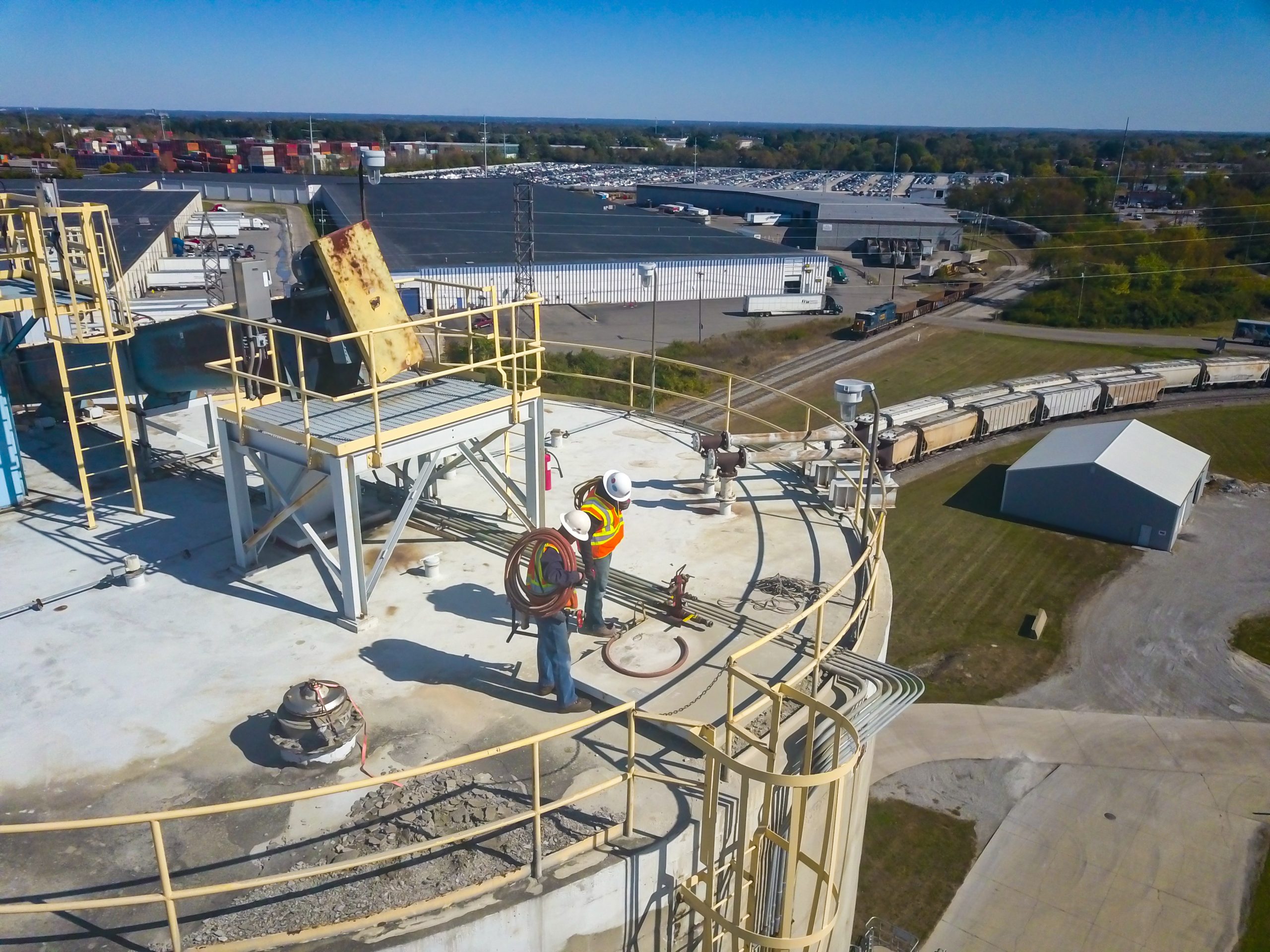
Certified Engineer On-Site Inspection
A structural engineer, sometimes accompanied by a designer, visits the site to conduct field observations. The engineer visually observes the exterior silo walls using binoculars for cracking, bulging, or material leakages. A three-pound hammer is used to test the wall in multiple locations; this acoustic sounding process can help determine if there is a potential for delamination. If issues are suspected, the engineer may drill and remove a small core from the wall for further inspection. Interior visual inspection follows, with photographs of any deterioration and a written report summarizing observations and recommendations.
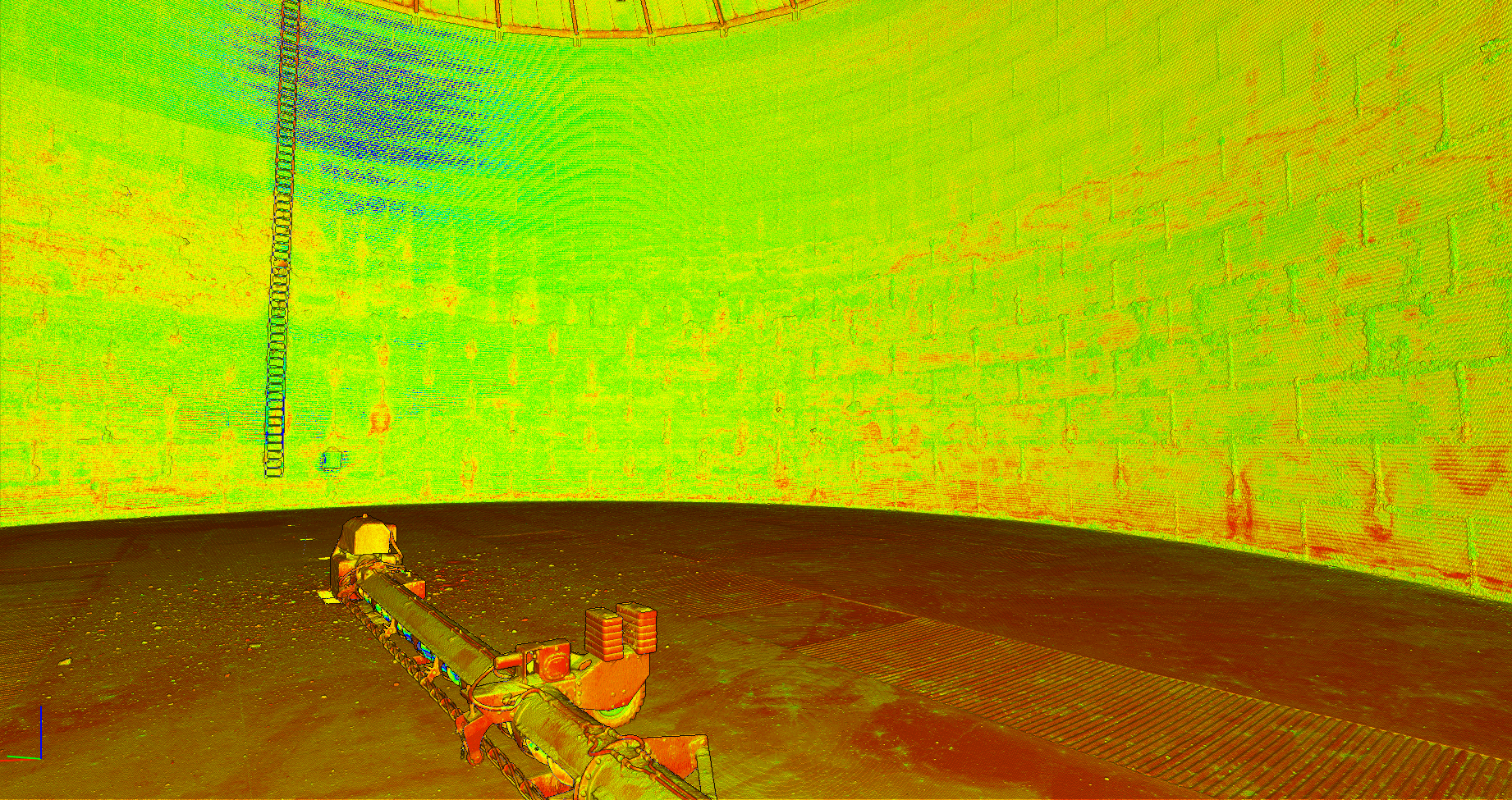
M-LAS LiDAR Scanning: ±2mm Accuracy
The M-LAS system captures the full interior geometry of a silo or bin using LiDAR scanning technology accurate to ±2mm. Zero confined-space entry required, the scanner is lowered into the vessel from the roof hatch. Results in 5–7 business days. CAD-compatible output: .las, .e57, .rcp formats plus 360° HDR imagery.
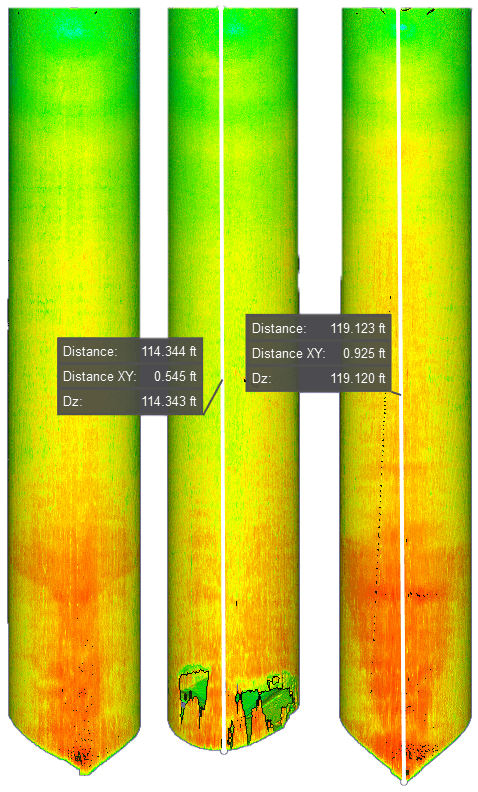
Engineer inspection + LiDAR for complete data.
For aged silos or vessels with known concerns, combining engineer inspection with M-LAS LiDAR scanning provides the most complete picture: visual condition assessment from the engineer and precise dimensional data from the scanner. Most recommended for vessels built before 1970 or vessels showing visible distress.
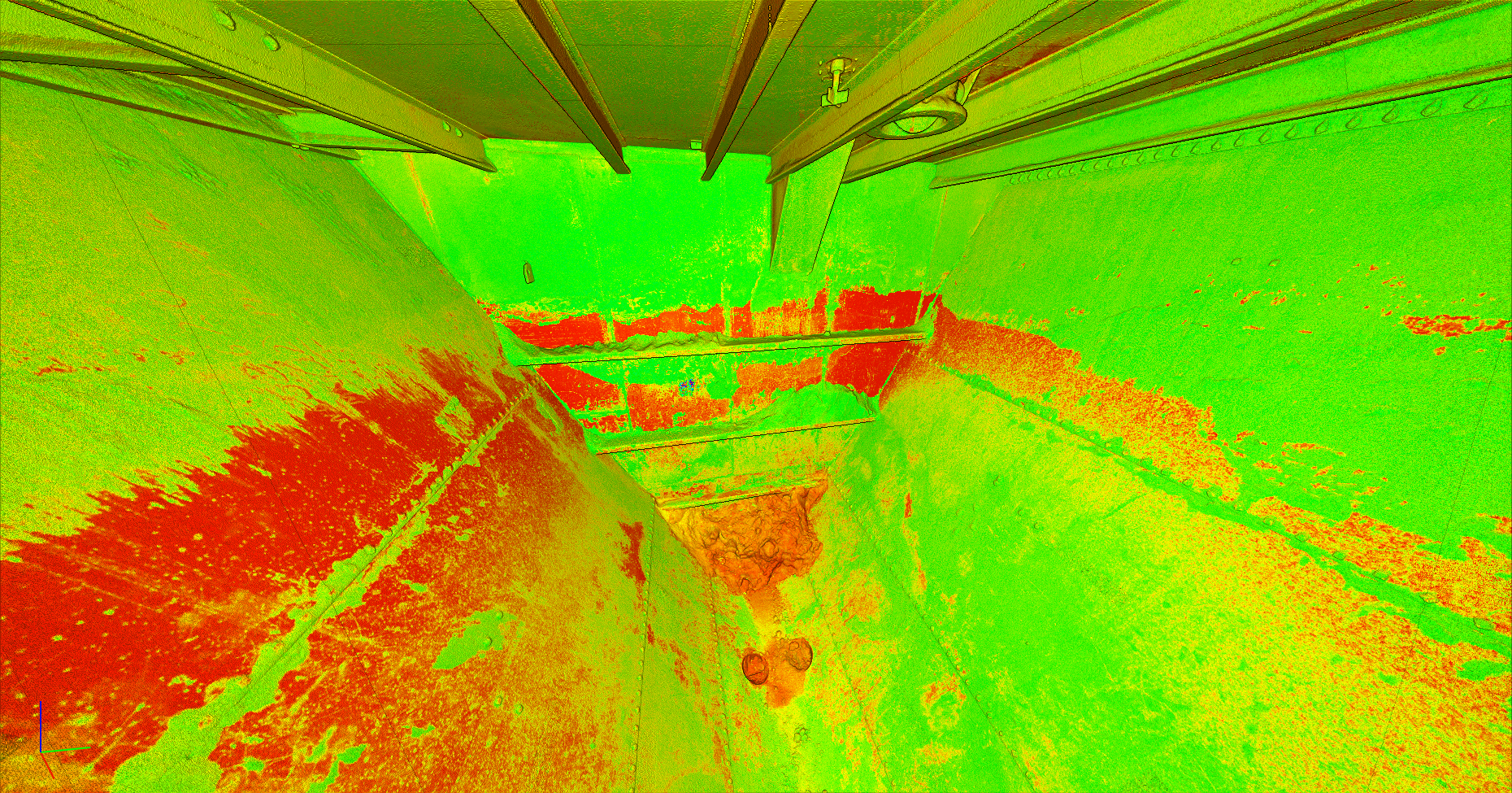
Complete interior geometry: without anyone going inside.
The M-LAS LiDAR system captures a precise 3D model of the vessel interior. The scanner is deployed from the roof hatch, no entry permit required, no atmospheric monitoring, no rescue standby. Internal wall profiles, cone geometry, remaining material volumes, and wall deformations are all captured in a single scan session. The output is delivered in CAD-compatible formats (.las, .e57, .rcp) and includes 360° HDR imagery for visual reference. Results are delivered in 5–7 business days.
- ±2mm accuracy, captures cracks, deformations, and wall deviations precisely
- Zero confined-space entry, no OSHA permit procedures required
- Full 360° interior coverage from a single scan position
- CAD-compatible output: .las, .e57, .rcp, compatible with all major CAD platforms
- Remaining volume calculation, confirms material levels in hard-to-access vessels
What M-LAS LiDAR data looks like.
LiDAR output is rendered in neon color maps that clearly show internal geometry, material levels, and any wall anomalies. Before and after scans confirm cleaning and structural changes over time.
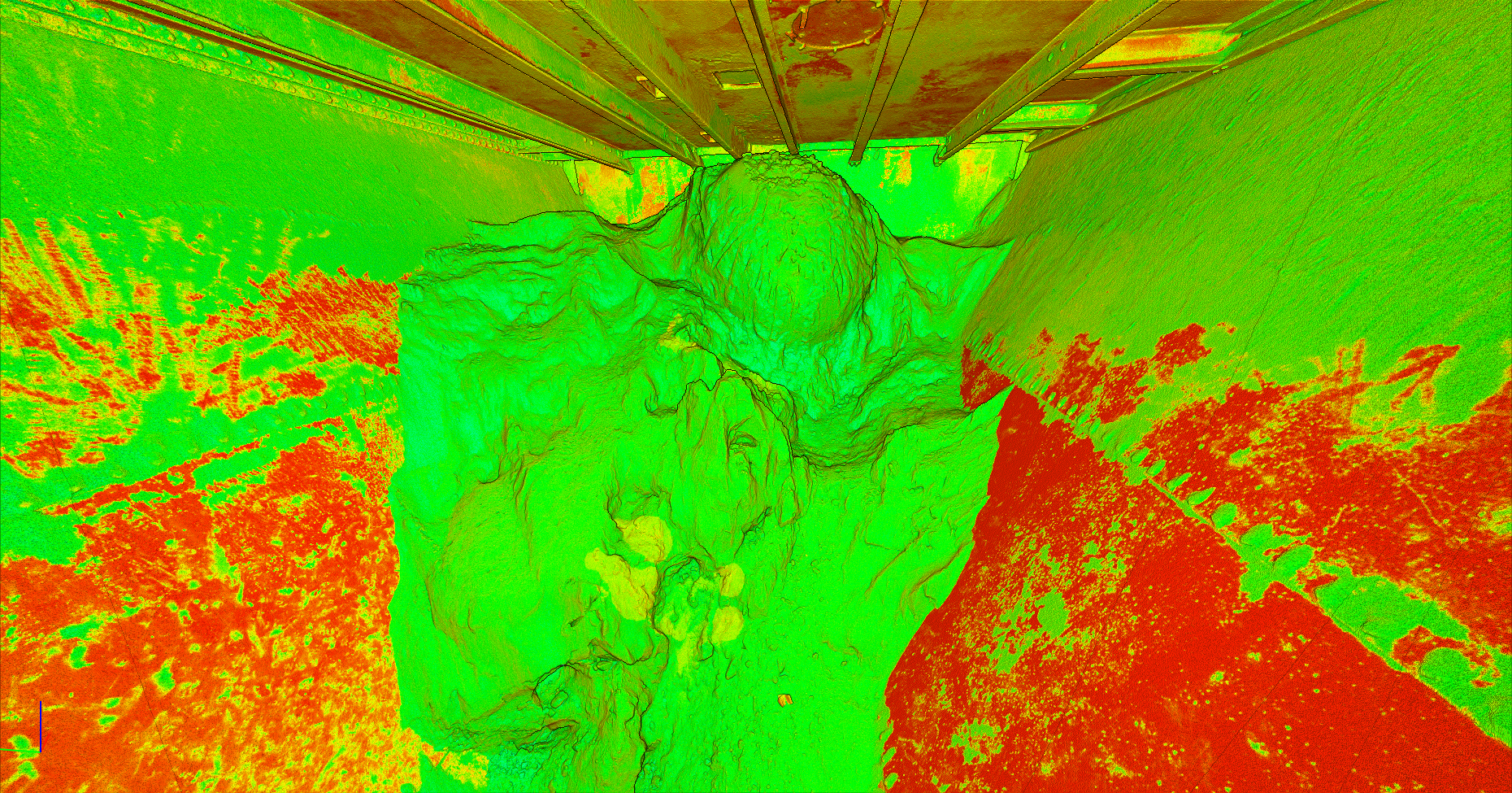
Pre-cleaning interior profile with buildup mapped.
Before scan captures the full profile of buildup on silo walls, cone, and outlet. Material volume and distribution are calculated precisely, informing the cleaning plan and method selection.
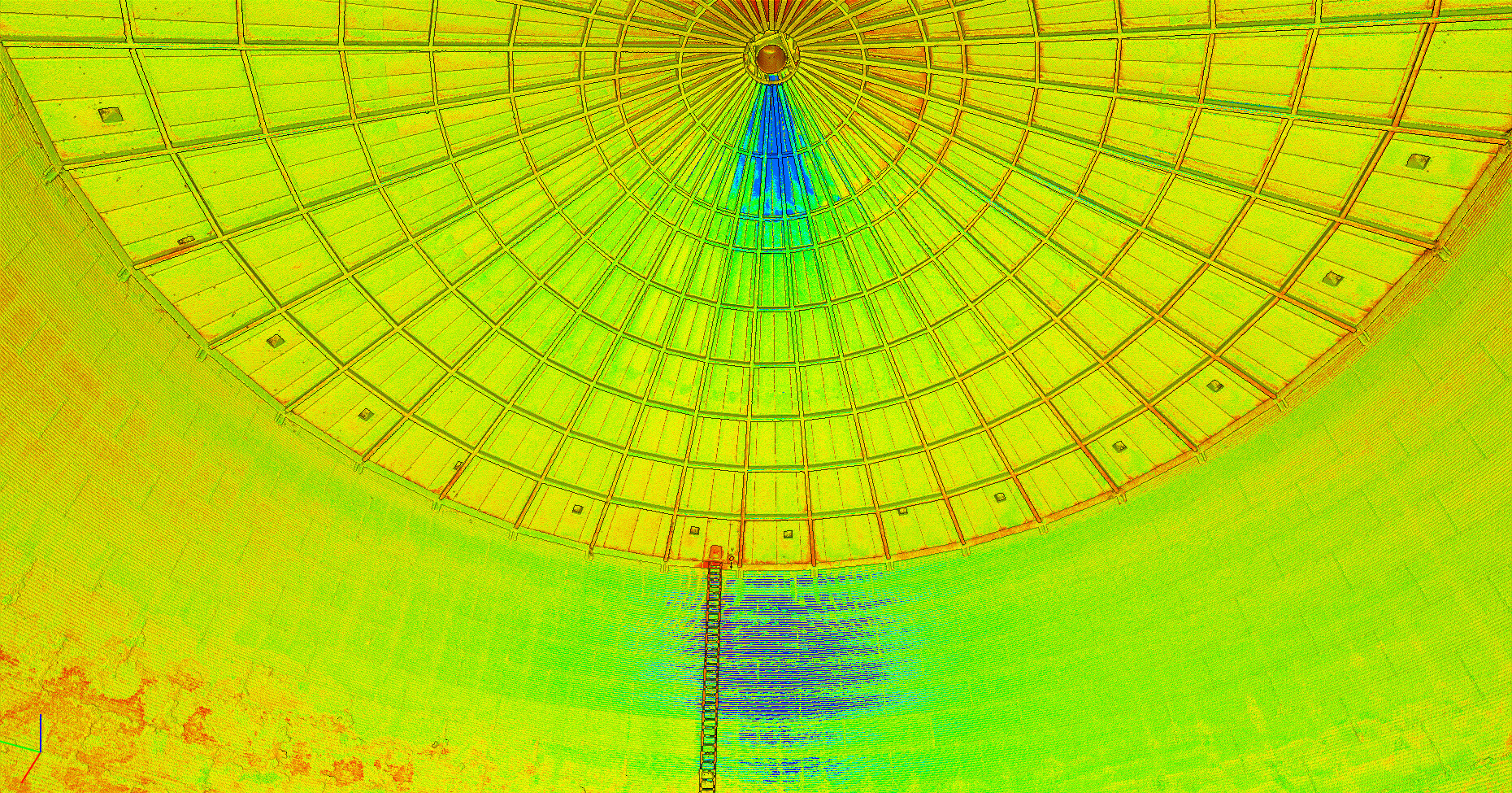
Post-cleaning geometry confirms complete removal.
After scan documents the cleaned vessel and confirms that buildup has been removed to specification. Before/after comparison is included in the written report as documented evidence.
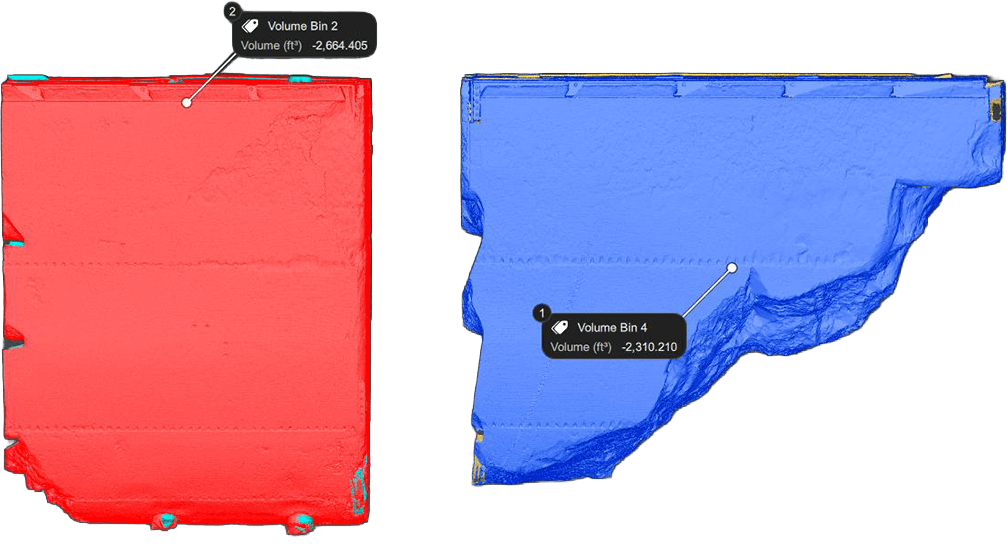
Bin volume and usable capacity confirmed precisely.
Post-cleaning volume scans confirm that the vessel is at designed capacity. Useful for insurance documentation, production planning, and verification of specification compliance.
Structural inspection is recommended for all aged vessel inventories.
Concrete and steel silo inspection.
Cement storage silos are frequently large, old, and subject to chemical attack from the stored material. Structural inspection is critical for aging concrete vessels.
Cement IndustryGrain bin and elevator silo inspection.
Grain storage facilities often have large numbers of aging flat-bottom and hopper-bottom bins. LiDAR scanning confirms internal condition without requiring entry permits.
Feed & GrainCoal dome and fly ash silo inspection.
Power plant storage structures handling coal and fly ash are subject to chemical attack, abrasion, and high-cycle loading. LiDAR scanning captures internal condition without entry.
Power IndustryTell us the vessel type, the age, and your access constraints. We’ll propose the right inspection method.
Concrete or steel, old or new, accessible or not, describe the vessel and its history. Mole·Master® will confirm whether engineer inspection, LiDAR scanning, or a combined approach is appropriate for your situation.