Vessel Cleaning Services for the Power Industry
Restoring Material Flow, Reducing Downtime and Protecting Critical Operations. Reliable material flow is essential to maintaining efficient power generation. Coal, fly ash, clinker, limestone, and other stored materials can accumulate over time, reducing storage capacity, restricting flow, and increasing the risk of unplanned outages.
Restoring Material Flow, Reducing Downtime and Protecting Critical Operations
Reliable material flow is essential to maintaining efficient power generation. Coal, fly ash, clinker, limestone, and other stored materials can accumulate over time, reducing storage capacity, restricting flow, and increasing the risk of unplanned outages.
Mole·Master® provides engineered no-entry cleaning solutions that safely restore storage vessels to full operational performance while minimizing downtime. Proprietary remote-operated cleaning systems eliminate the need for confined space entry, significantly reducing risk while improving cleaning efficiency.
The industry’s most experienced technicians respond to routine maintenance projects, emergency blockages, and challenging material flow problems, including hot spots and fire-related conditions. Non-sparking cleaning equipment and proven operating procedures help reduce ignition risks while protecting personnel and critical plant assets.
Every project is performed by highly trained technicians who meet or exceed OSHA, MSHA, and applicable state and site-specific safety requirements. Continuous training and industry certifications ensure that every crew is prepared to work safely and effectively in demanding power generation environments.
Power producers throughout the United States have trusted Mole·Master® for decades to solve complex storage vessel challenges, restore production capacity, and keep critical operations running safely and reliably.
All equipment remote-controlled from the silo roof: zero entry at any point.
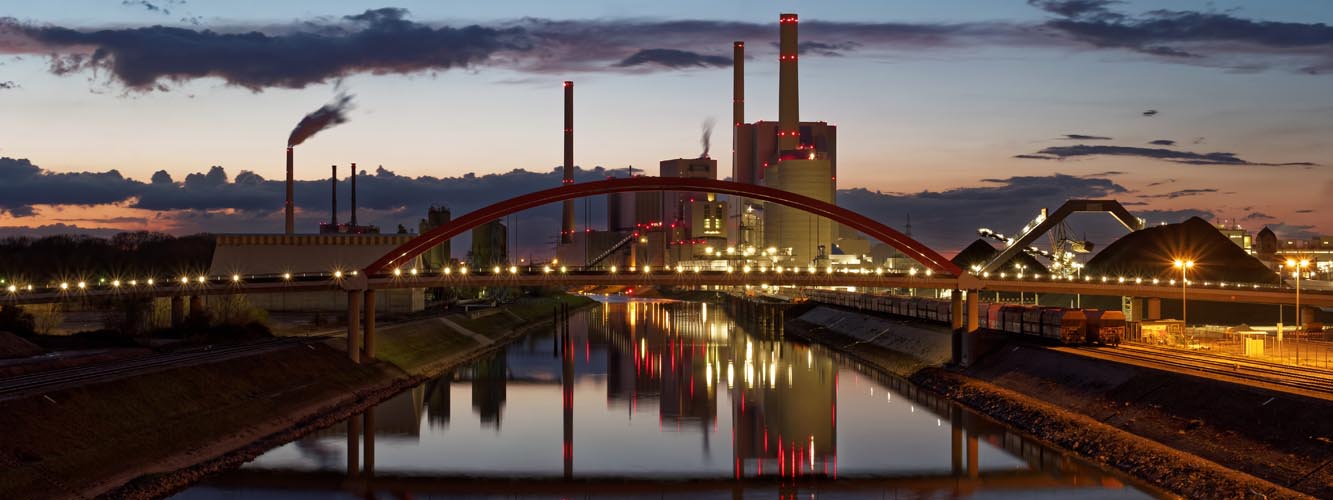
Raw coal, clean coal: cleared without entry or sparks.
Coal silos and hoppers cleaned using the Big·Mole system with 100% non-sparking tooling. No confined-space entry, no hot work, no fire ignition risk created during cleaning operations.
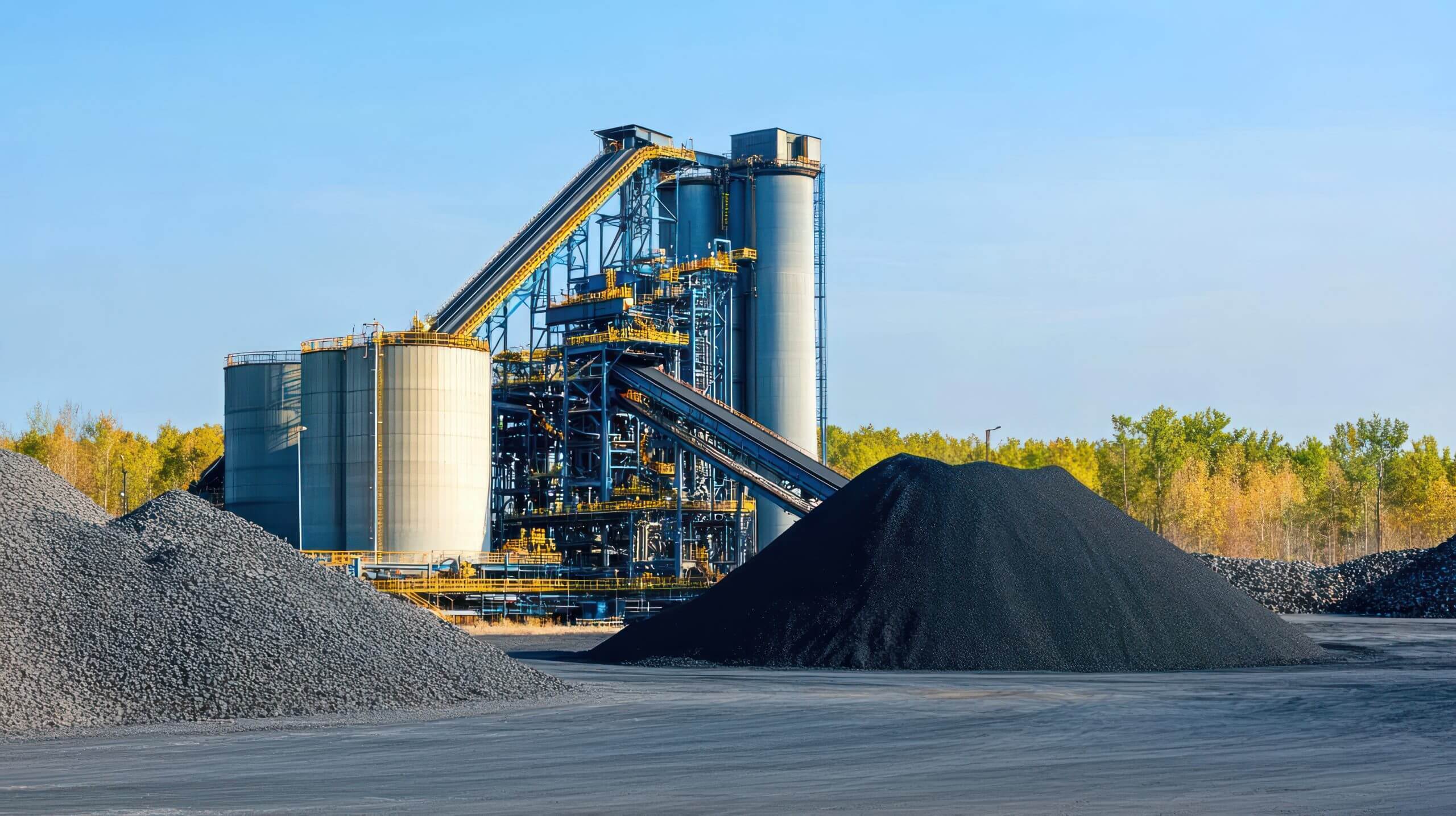
Fly ash build-up removed: capacity fully restored.
Fly ash can pack, arch, and rathole in silos, reducing effective storage capacity and slowing operations. The Big·Mole process restores full cross-sectional capacity without water contact and without the dust exposure that comes with manual entry.
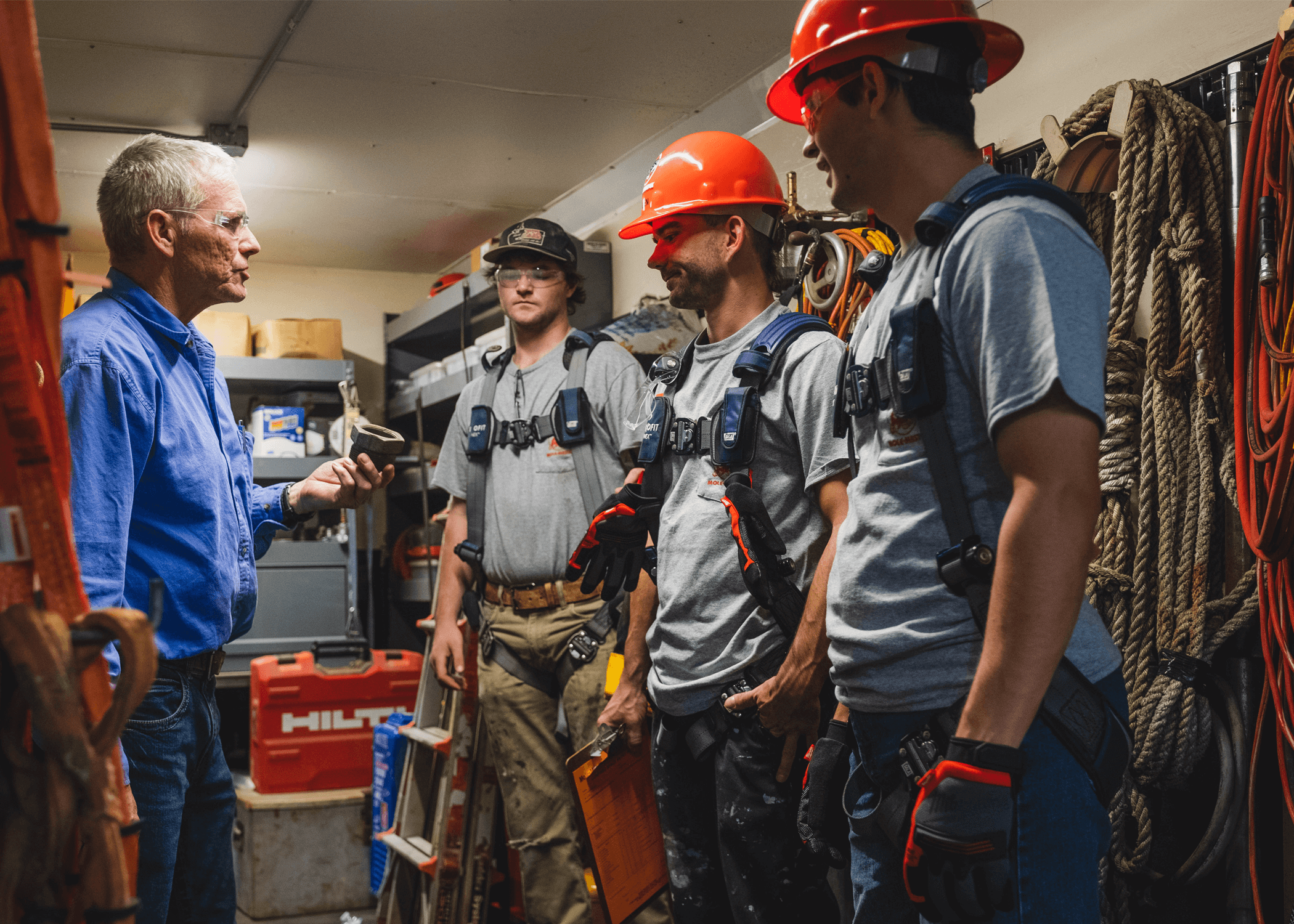
Certified for the power generation environment.
Mole·Master® crews hold OSHA, MSHA, and West Virginia Office of Miners’ Health, Safety & Training certifications. All work is conducted under a written JSA and confined-space program.
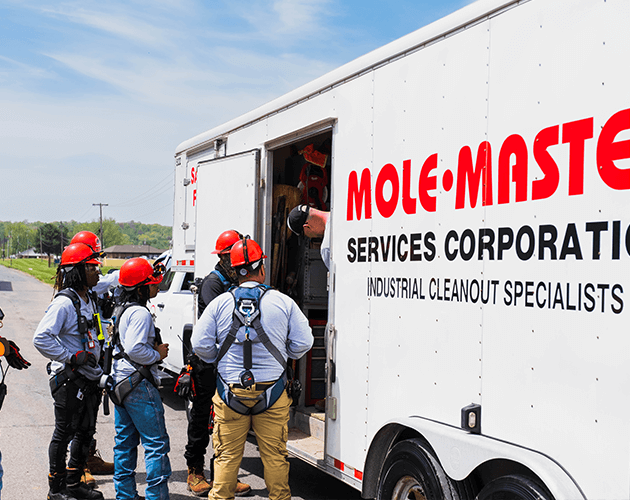
Most contractors stop at the gate when there’s an active fire. We go in.
Hot spots and active fires in fly ash and coal storage are a reality at power generation facilities. Mole·Master® provides active assistance for these situations when other contractors cannot, using specialized approaches tailored to the material and the vessel conditions:
- CO₂ Purging, inerting the vessel atmosphere to suppress active combustion
- Ambient Air Vaporizers, controlled reintroduction of atmosphere after hot-spot treatment
- Chemical Surfactants, penetrating packed fly ash to reach buried hot spots
- Hot-spot location and mapping prior to cleaning operations
- Coordination with facility fire and safety team throughout
Every tool certified for combustible dust environments.
All Mole·Master® equipment used at power generation facilities is non-sparking and approved for use in combustible dust atmospheres.
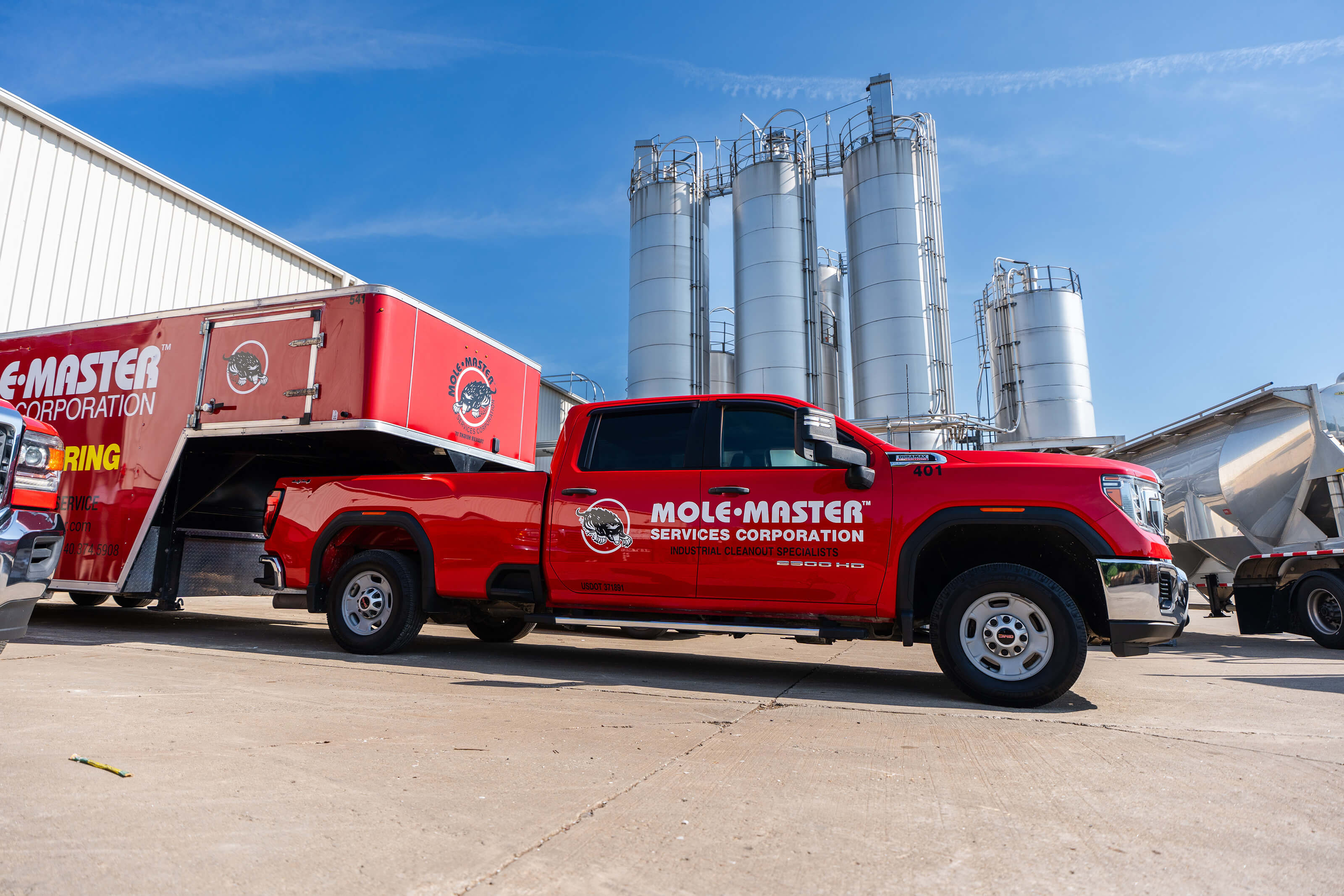
Big·Mole®
100% non-sparking. 100% dry. Controlled entirely from the silo roof with no human entry at any point in the cleaning process.
View Specs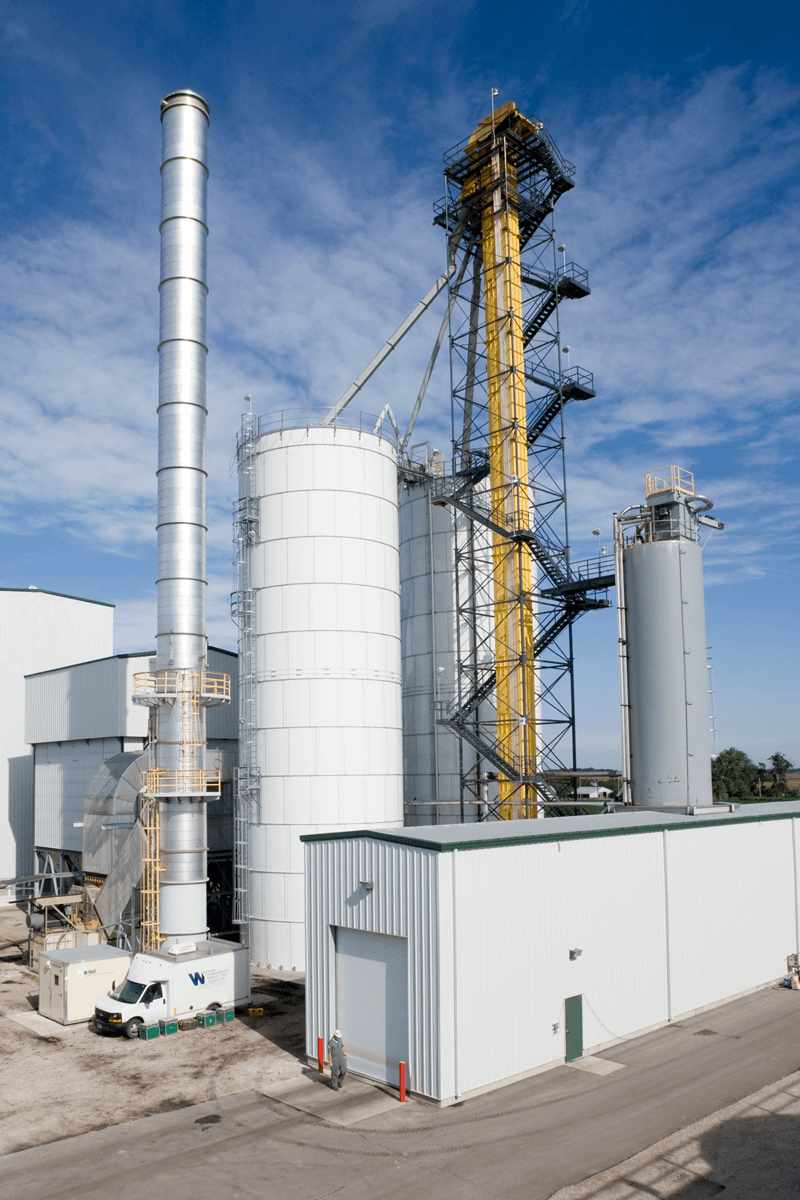
Industrial Vacuum
Vacuum truck services for dust, spilled fly ash, and recovered material in and around silos, hoppers, and conveyor systems.
Learn More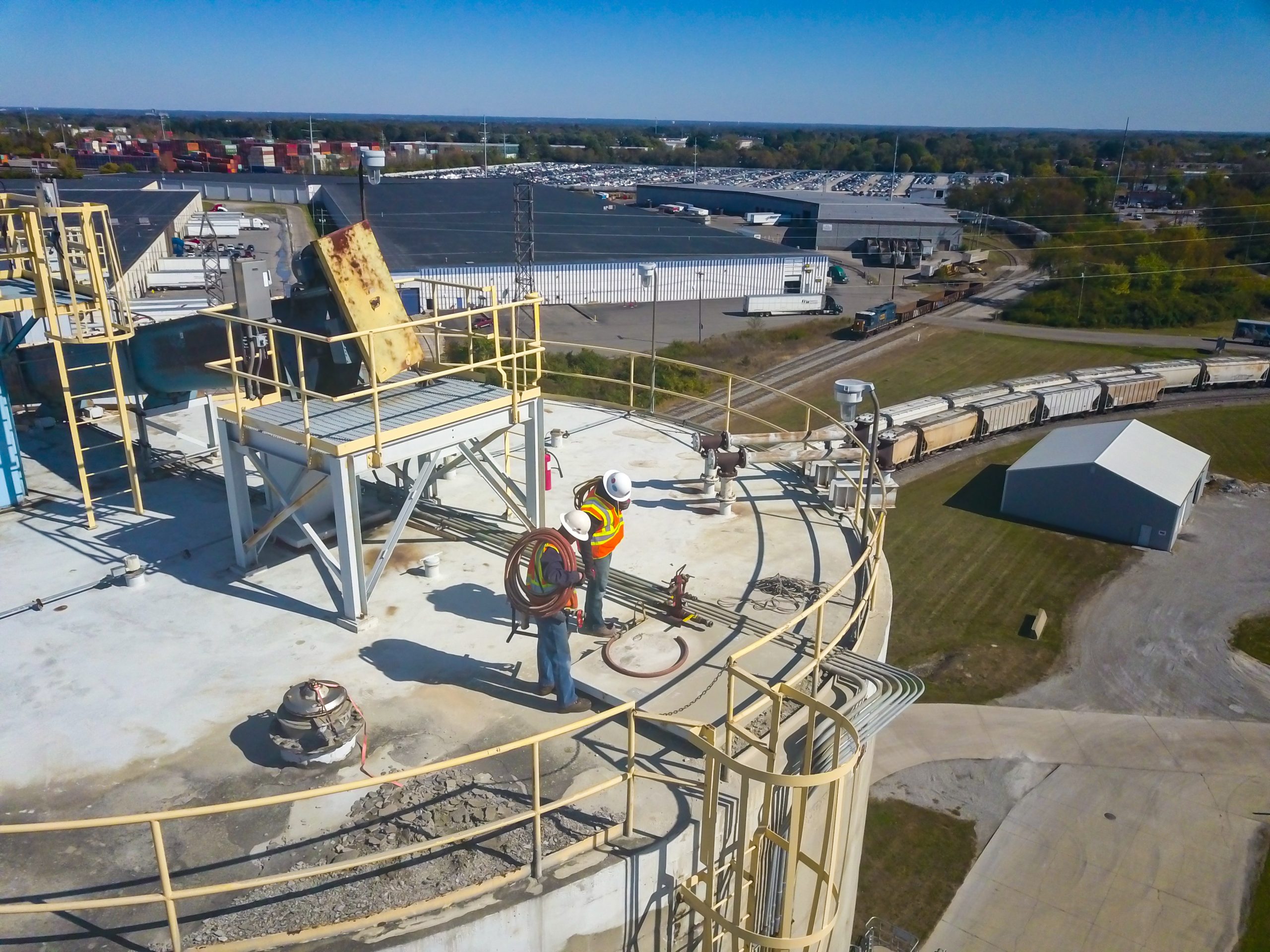
Structural Silo Inspection
Written engineering report and vessel condition assessment. Identifies compromised vessel structures before they affect safe operation.
Learn MoreCoal, fly ash, or clinker: non-sparking process, active fire response, zero entry.
Tell us the vessel type, material, and current condition, including any hot spots or active fire situations. We’ll confirm the right approach before any equipment is deployed.